
Why Volatility Is the Price of Admission
If you’ve spent any time watching markets—even casually—you’ve noticed something uncomfortable: prices don’t move in straight lines. They lurch, they stall, they fall when they “shouldn’t,” and they rise when no one feels confident enough to believe it.
And that discomfort—those jagged moves up and down—is what we call volatility.
Most investors treat volatility like a problem to be solved. Something to minimize, avoid, or outsmart. After 40 years in the markets, I’ll tell you something that may sound counterintuitive:
Volatility is not the problem. It’s the price of admission.
The Deal You Didn’t Know You Signed
When you buy into the stock market, you are entering into an unspoken contract.
It goes something like this:
You agree to endure uncertainty – even if you didn’t sign up for it
You agree to tolerate temporary losses – even if you don’t want to
You agree to look wrong from time to time - even if it’s embarrassing
And in return?
You get access to long-term wealth creation – reasons 1, 2, and 3 to be in the market at all
You get participation in human progress – it’s indirect, but it’s there; good for you
You get compounding working in your favor – because if it’s working against you (I’m looking at you credit card debt), you’ll never create wealth
Most people want the second list without accepting the first. That’s not how this works.
The Illusion of a Smooth Ride
Investors love the idea of steady returns. Predictable growth. A calm, upward-sloping line. But that line doesn’t exist in reality.
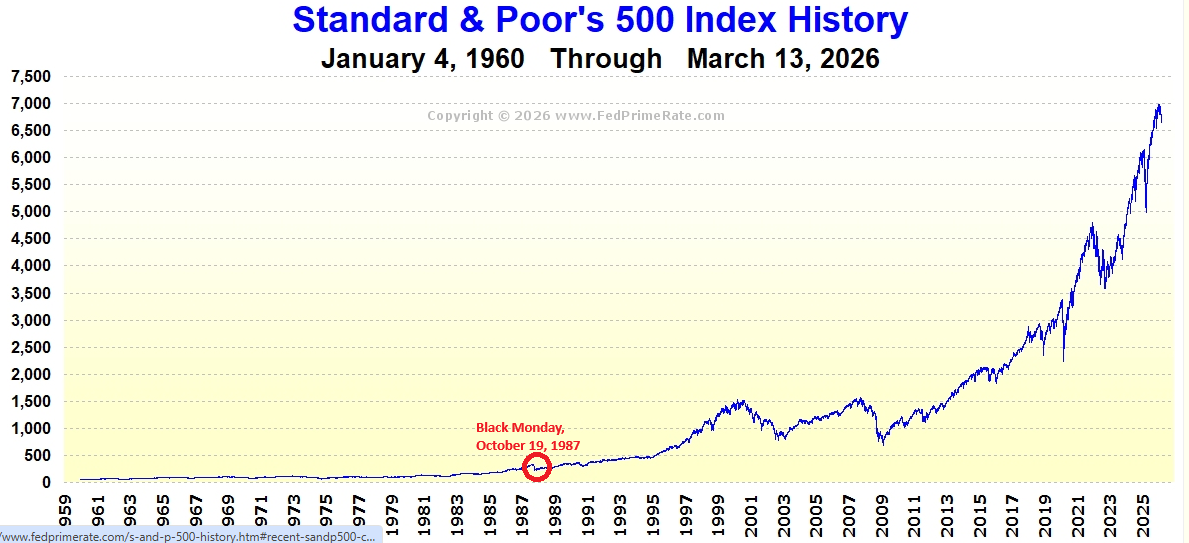
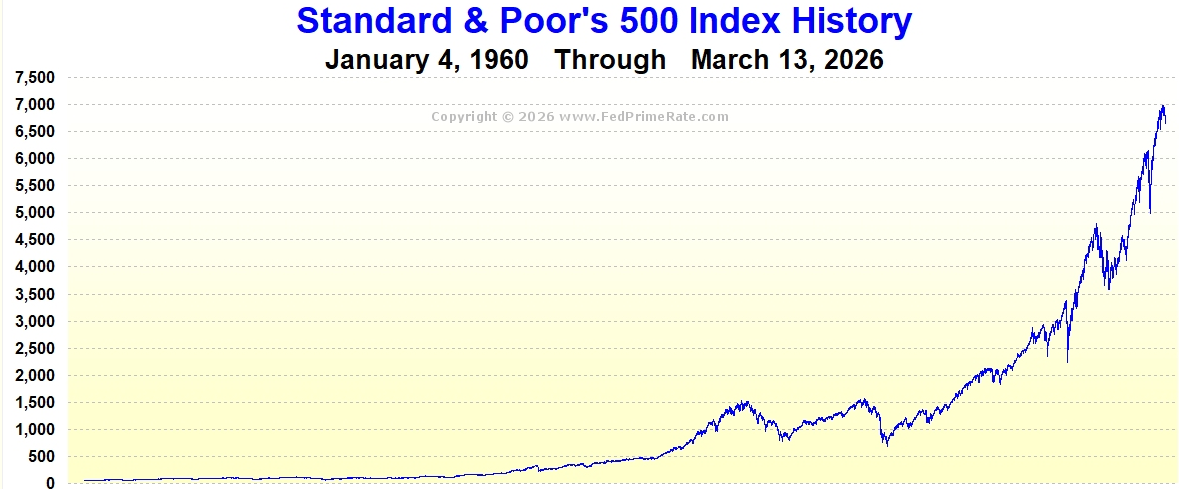
What you’re seeing in long-term charts—if you zoom out far enough—is a long-term upward trend. But inside that trend are countless drops, corrections, and moments where it felt like everything might be breaking.
Those moments are not anomalies. They are the mechanism.
Without volatility, there is no opportunity for return.
Why Volatility Exists
Markets are not machines. They are human systems. Every price reflects fear and greed, uncertainty about the future, and constant re-evaluation of value.
If everyone agreed on what something was worth, the price wouldn’t move. Volatility exists because people disagree. That disagreement is exactly what creates opportunity.
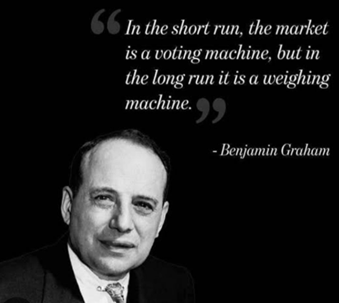
Human emotion drives day-to-day stock prices; fear, greed, uncertainty, hubris, et. al. Investors vote with their dollars. Over longer periods, the countless daily emotional moves establish a trend that reveal what a company, and its stock, is worth.
The Cost of Trying to Avoid It
Here’s where most investors get into trouble.
They don’t say, “I want to avoid returns.” They say, “I want to avoid the pain.” So they sell when markets fall, wait for things to “feel better,” and sit in cash during uncertainty.
It feels rational. It feels safe.
But in practice, it usually means selling low, buying back higher, and missing the strongest recovery days. In other words, trying to avoid volatility often guarantees worse outcomes.
The Market’s Dirty Secret
The biggest gains in the market don’t come during calm periods. They come right after the worst volatility. After panic, sharp declines, and the moments when investors are most uncomfortable.
Miss those periods, and you don’t just reduce returns—you fundamentally change the outcome of your portfolio. If you’ve read any of my other articles, you know I began my investing career about 8 months before Black Monday. The S&P 500 was down more than 20%, the largest single day decline before or since. There was panic, and there was panic selling. By December 31, the market was up almost 6% for the year, even with Black Monday. The largest single day decline in history barely registers a blip on a long-term chart. Spoiler alert: read to the bottom and I’ll show you on the chart.
Discipline matters more than intelligence in investing.
Volatility vs. Risk: Know the Difference
One of the most damaging errors investors make is confusing volatility with risk.
They are not the same thing. I blame my own profession for this. In our never-ending quest to look better than our competitors, we introduced risk-adjusted returns. But you can’t spend risk adjustments, just like you can’t spend relative returns. For institutions managing billions of dollars, this is defensible. For individuals with portfolios under $5 million, return is return. What can you spend,
Volatility is short-term price movement caused by emotional humans. Risk is permanent loss of capital, sometimes caused by emotional humans.
The stock dropping 20% temporarily is volatility. Selling it at that point and locking in the loss—that’s risk realized. The market doesn’t hurt you nearly as much as your reaction to it.
The Emotional Toll (And Why It Matters)
Let’s not pretend this is easy. Watching your portfolio drop—even temporarily—is uncomfortable. It is so much easier for professionals to glibly describe. We can tell you to be patient, that in the long-run the market always rebounds, that you’re well-diversified to handle a market shock – but at the end of the day it is the investor who has fewer dollars to spend on retirement, or college, or that boat. Expectations change.
It triggers survival instincts, loss aversion, and the need to act. If you’ve lived through enough cycles, you begin to recognize the pattern: The panic always feels justified. The headlines always sound convincing. The uncertainty always feels different this time.
And yet, over time, markets recover, they move higher, they eventually reach new highs. (See how easy that was for me to describe)
Reframing the Conversation
Instead of asking, “How do I avoid volatility?” A better question is, “How do I survive it?” Because survival - not prediction - is the real game.
That means proper diversification, reasonable expectations, enough liquidity to avoid forced selling, and the temperament to stay invested.
This is what you, and your financial advisor should you have one, focus on. Successful investing through volatility (and really, when is the market not volatile?) described in 4 rules:
Proper diversification
Reasonable expectations
Enough liquidity to avoid forced selling
The temperament to stay invested
Fortunately, there are outlets for our free-spirited, devil may care, human emotions. But those are for your risk capital, which I will discuss in future newsletters. And yes, it definitely falls under the
The Real Edge
The greatest edge an investor can have is not information. It’s behavior.
If you can stay invested during uncomfortable periods, resist emotional reactions, and understand that volatility is normal—you’ve already separated yourself from the majority.
Final Thought
There is no version of investing where you get long-term returns without short-term discomfort. No strategy that eliminates volatility while preserving meaningful upside. You can buy protection that mitigates volatility, but it raises the cost of your investment and reduces your return.
Volatility is not a flaw in the system. It is the system.
Once you accept that, you can stop fighting the market - and start benefiting from it.
For those of you who stuck around, good for you. And good for the investors who stuck around in 1987 and enjoyed another 13 years of a bull market.